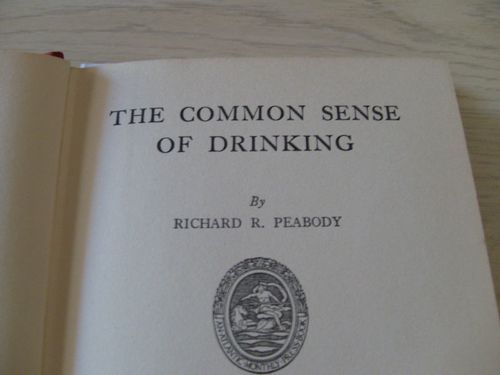
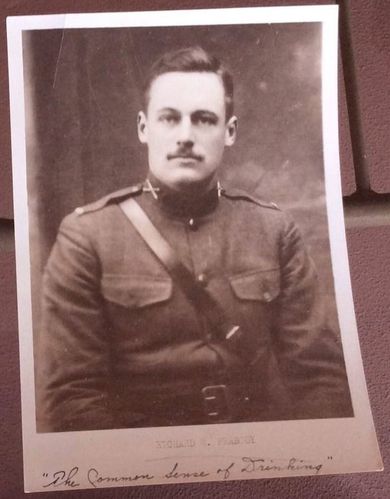
"The Common Sense of Drinking"

Publié le par kreizker

HISTOIRE 791c the common sense of drinking


HISTOIRE 791 the common sense of drinking


HISTOIRE 791a the common sense of drinking


HISTOIRE 791b the common sense of drinking


HISTOIRE 791e the common sense of drinking

Parution en avril 1931 - Bill W. s'en est inspiré pour la rédaction du Big Book

Dans le chapitre 3, "Autres données sur l'alcoolisme", (Big Book, 4° édition, pages 34 à 49), l'histoire d'un homme de 36 ans apparaît avoir été tirée du livre de Peabody.

Il est un des premiers à avoir proclamé que l'alcoolisme était incurable : " Suffice it to say, once a drunkard always a drunkard–or a teetotaler! A fairly exhaustive inquiry has elicited no exceptions to this rule"
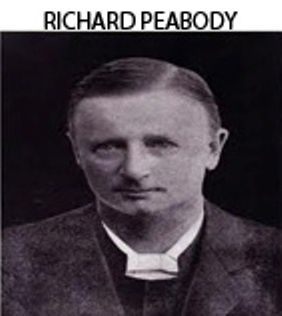
 

richard peabody

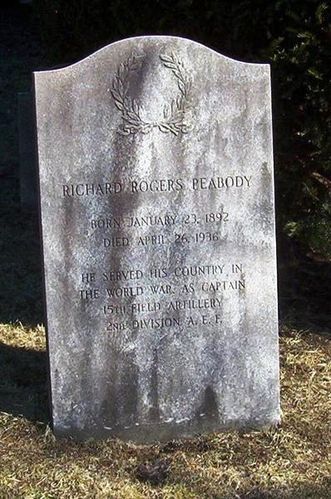
Décédé le 26 avril 1936, à NYC, après une rechute
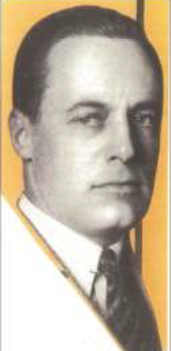
HISTOIRE richard peabody 3


HISTOIRE richard peabody 4


HISTOIRE richard peabody 2

Harmony Grove Cemetery

Salem - Essex County - Massachusetts - USA

Publié dans histoire AA

Pour être informé des derniers articles, inscrivez vous :
Commenter cet article
A
Is there any literature to backup the statement that Peabody relapsed in 1936?<br /> Thanks!
Répondre
K
<br /> <br /> It probably is not sufficient to be totally sure, but hereunder excerpts from <br /> <br /> <br />  <br /> <br /> <br /> EARLY ALCOHOLISM TREATMENT: THE EMMANUEL MOVEMENT and RICHARD PEABODY<br /> <br /> <br /> Katherine McCarthy, Ph.D.<br /> <br /> <br /> Journal of Studies on Alcohol, Vol.45, No.1, 1984.<br /> <br /> <br />  <br /> <br /> <br /> "Peabody and his coworkers apparently did not share Baylor's personal success at remaining sober.<br /> A common opinion is that Peabody died intoxicated, although the evidence is not conclusive.<br /> <br /> <br /> Samuel Crocker, who had once shared an office with Peabody, told Faye R. that he<br /> was intoxicated at the time of his death. The personal copy of Peabody's book<br /> belonging to Bill Wilson (one of the founders of A.A.) now in the A.A. Archives, contains the following inscription; "Dr. Peabody was<br /> as far as is known the first authority to state, "once an alcoholic, always an<br /> alcoholic," and he proved it by returning to drinking and by dying of alcoholism - proving to us that the condition is<br /> uncurable."<br /> <br /> <br /> This copy was originally owned by Rosa Burwell of Philadelphia. Some early A.A. members share the<br /> opinion that Peabody died intoxicated.<br /> <br /> <br /> The published sources contradict each other. Wister quoted Peabody's second wife to the effect<br /> that he died of pneumonia. The editors of Scribner's magazine, which published an article of his<br /> posthumously, claimed that he died of a heart attack. Mrs. Crosby did not say."<br /> <br /> <br />  <br /> <br /> <br />  <br /> <br /> <br /> "Although Peabody's method was widely practiced for about two decades,<br /> <br /> <br /> little is known of its overall therapeutic success, and an accurate guess is impossible at this<br /> date. Marty Mann concluded that Peabody and his therapists "accomplished a heroic work during the 1930's,<br /> when little else was being done for alcoholics" and that the method "was<br /> <br /> <br /> effective with a considerable number"' of patients. It is known that a few remained abstinent and<br /> professionally active in the field of alcoholism. Others who failed at the Peabody method were known to<br /> have joined A.A. in its early years, but it is impossible to determine how many<br /> remained quietly sober without joining A.A. or professional groups. The fact that several of the Peabody method's<br /> major practitioners - apparently including the founder - were not able to maintain their sobriety, however, does not bode well for other patients with whom contact was lost."<br /> <br /> <br /> <br />